


Spanish science advances towards real application
The selected projects will allow research groups to explore the technical, commercial, or industrial viability of scientific results that have already demonstrated value in the laboratory. With this call, the MICIU and the AEI reinforce their strategy to convert more knowledge into impact and accelerate the arrival of innovations to the productive sector.
The application areas are broad: health, energy, advanced materials, digitalization, biotechnology, sustainability, and other areas where Spain has strong scientific capabilities but with historical gaps in transfer.
An investment designed to reduce the distance between science and the market
The call addresses a critical need: many scientific breakthroughs fail to become products, services, or technologies due to a lack of funding in early stages. Proofs of Concept specifically cover this gap, allowing for:
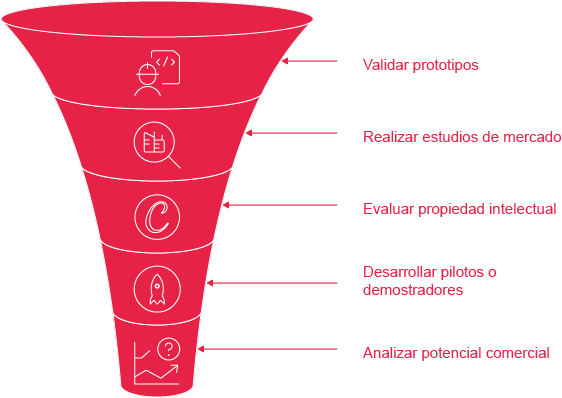
This type of investment is key to preventing promising technologies from getting ‘stuck’ before being transferred to companies or becoming the basis for new entrepreneurial projects.
Transfer as a strategic priority
The AEI highlights that these projects seek to reinforce the connection between science, industry, and society, aligning with European policies that demand greater social and economic return from public research
The measure also fits a clear trend: Spain wants to position itself as a country capable of transforming research into applied innovation, strengthening its technological sovereignty and the competitiveness of its business sector.
What this move means for the ecosystem
For universities, research centers, and KTT Offices, this call implies:
- more resources to validate technologies with real potential
- better conditions for licensing results to companies
- a path to create more solid spin-offs
- incentives to work with market criteria from early stages
For companies and administrations, it means a clear opportunity to identify emerging technologies and collaborate with scientific teams with greater technological maturity.
This economic boost not only funds projects: it shortens the distance between the laboratory and society. Transfer ceases to be an ‘eternal pending issue’ and becomes a strategic vector for the country.